Condition loss can happen silently
Food deliveries for schools can be affected by temperature, humidity, unstable handling or missing traceability. Without monitoring, problems may only be discovered after the delivery is complete.
University of Salento · Internet of Things Exam Project
IoT and AI system for intelligent school food delivery monitoring
A Raspberry Pi and React-based system that monitors food delivery conditions, tracks driver GPS from the phone browser, and supports administrators with AI-assisted driver recommendation.
Project Overview
School meal transportation needs more than basic logistics. Raqeb Food combines IoT sensors, GPS tracking, role-based dashboards, delivery workflow management and AI recommendation to make each delivery more visible and controlled.
Food deliveries for schools can be affected by temperature, humidity, unstable handling or missing traceability. Without monitoring, problems may only be discovered after the delivery is complete.
Raqeb Food links school requests, admin assignment, driver workflow, live sensor monitoring and delivery reports inside one prototype system designed for real-world IoT evaluation.
Temperature, humidity and tilt data are collected from the delivery box through the Raspberry Pi backend.
The driver browser sends live coordinates using the Geolocation API after delivery start.
A Decision Tree predicts delivery-condition risk and helps rank available drivers for the request.
Important monitoring events are saved in the database and can be reviewed after completion.
System Architecture
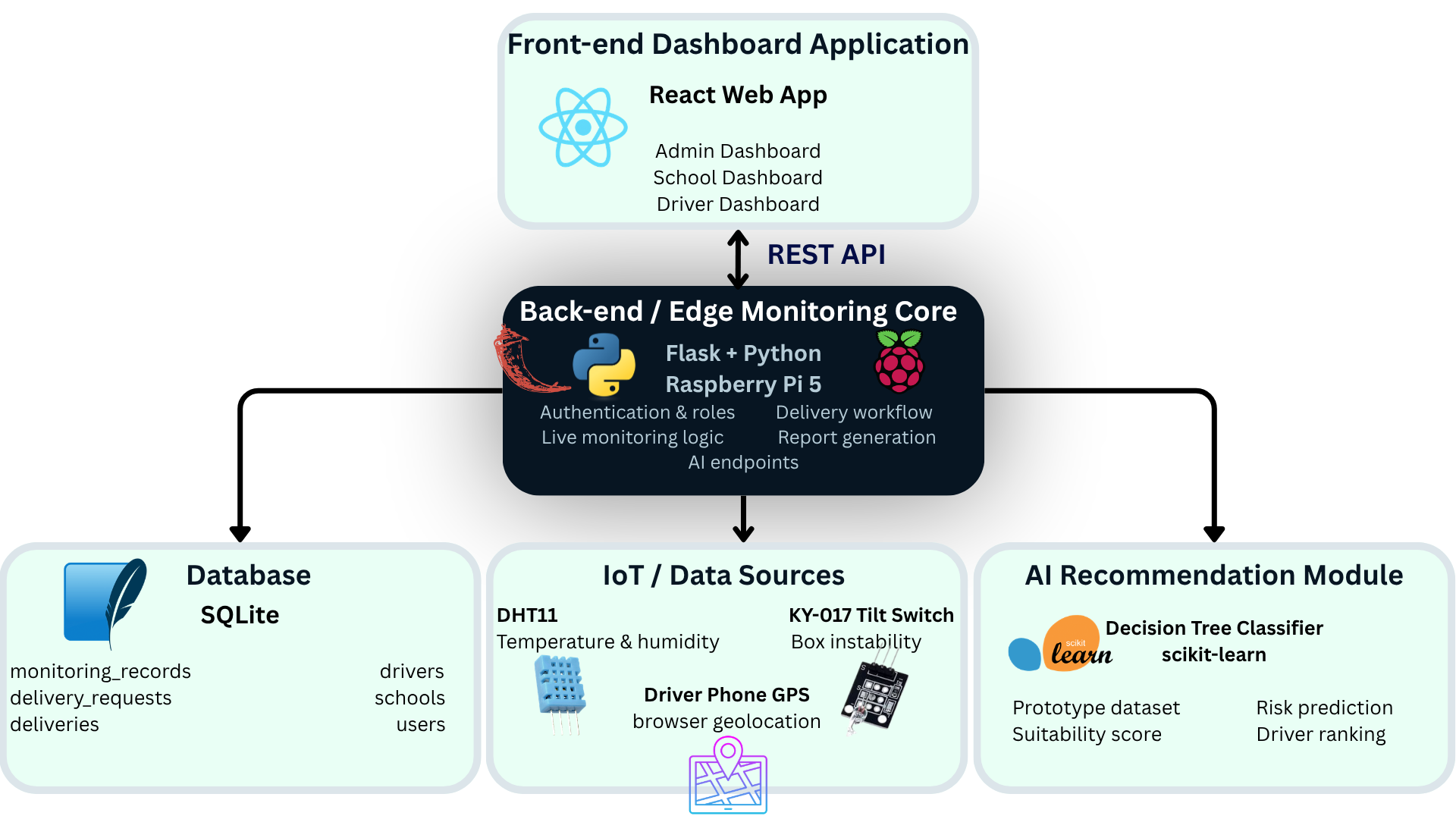
The following diagram presents the overall architecture of Raqeb Food, showing how the React dashboard, Flask backend, Raspberry Pi, SQLite database, IoT sensors, phone GPS and AI recommendation module interact.
Role-based Dashboards
Each user role has a focused dashboard. The administrator manages requests and users, the school creates and tracks delivery requests, and the driver executes the delivery from the phone.
Admin Dashboard
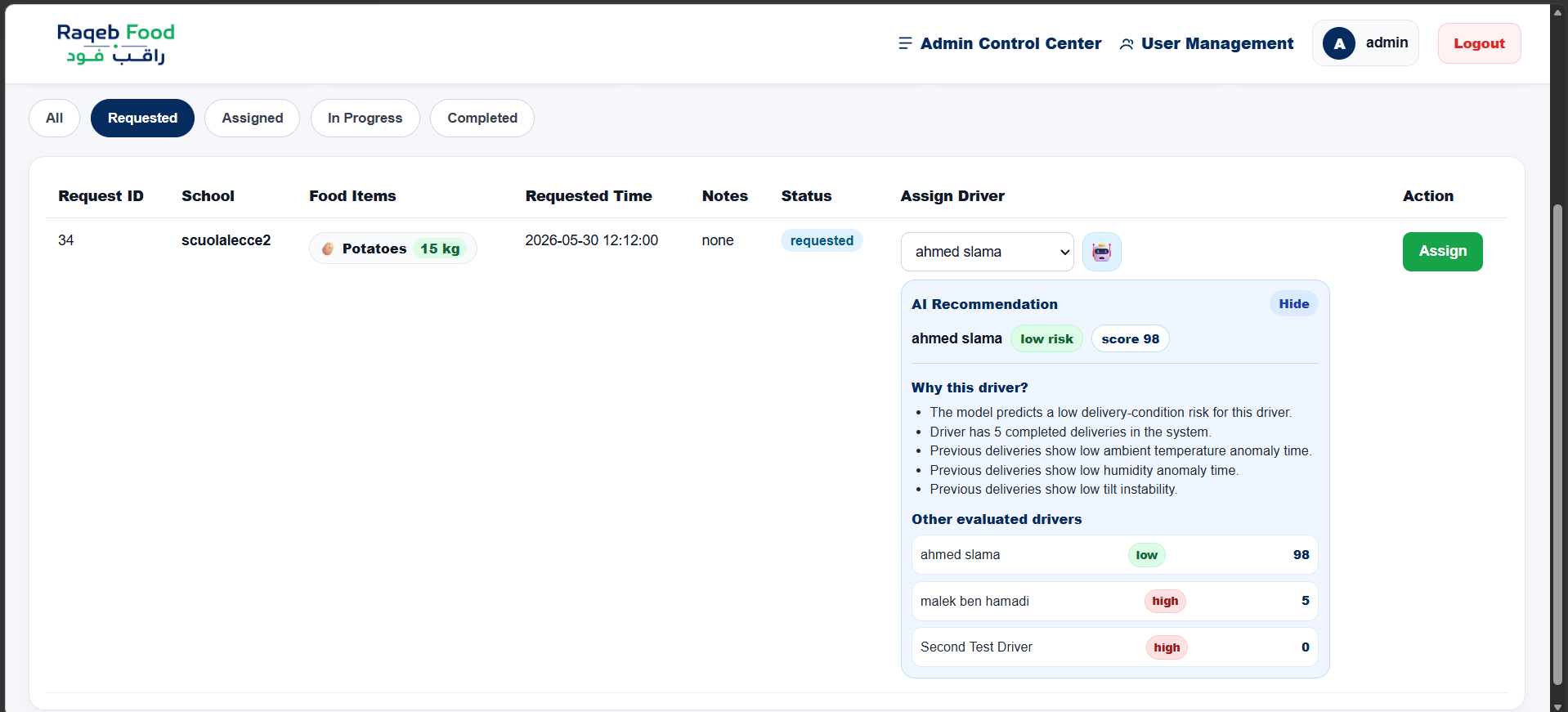
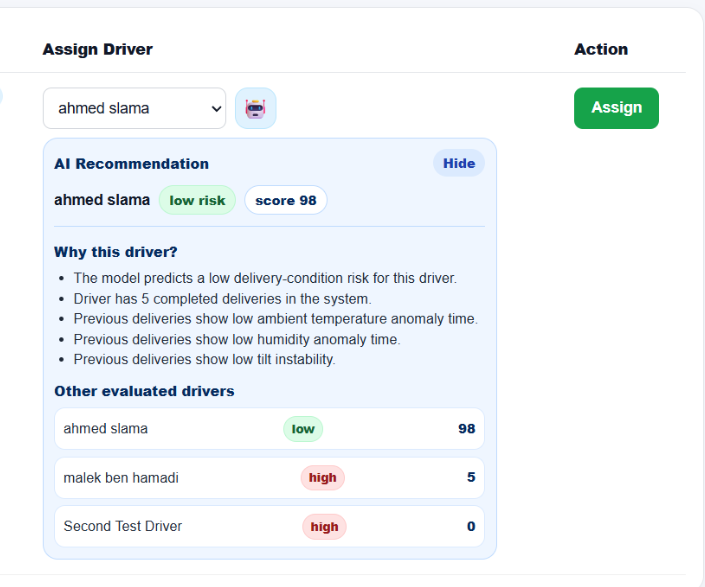
The admin control center allows the administrator to review school requests, compare available drivers, display AI recommendation reasons, assign a driver, and access delivery reports.
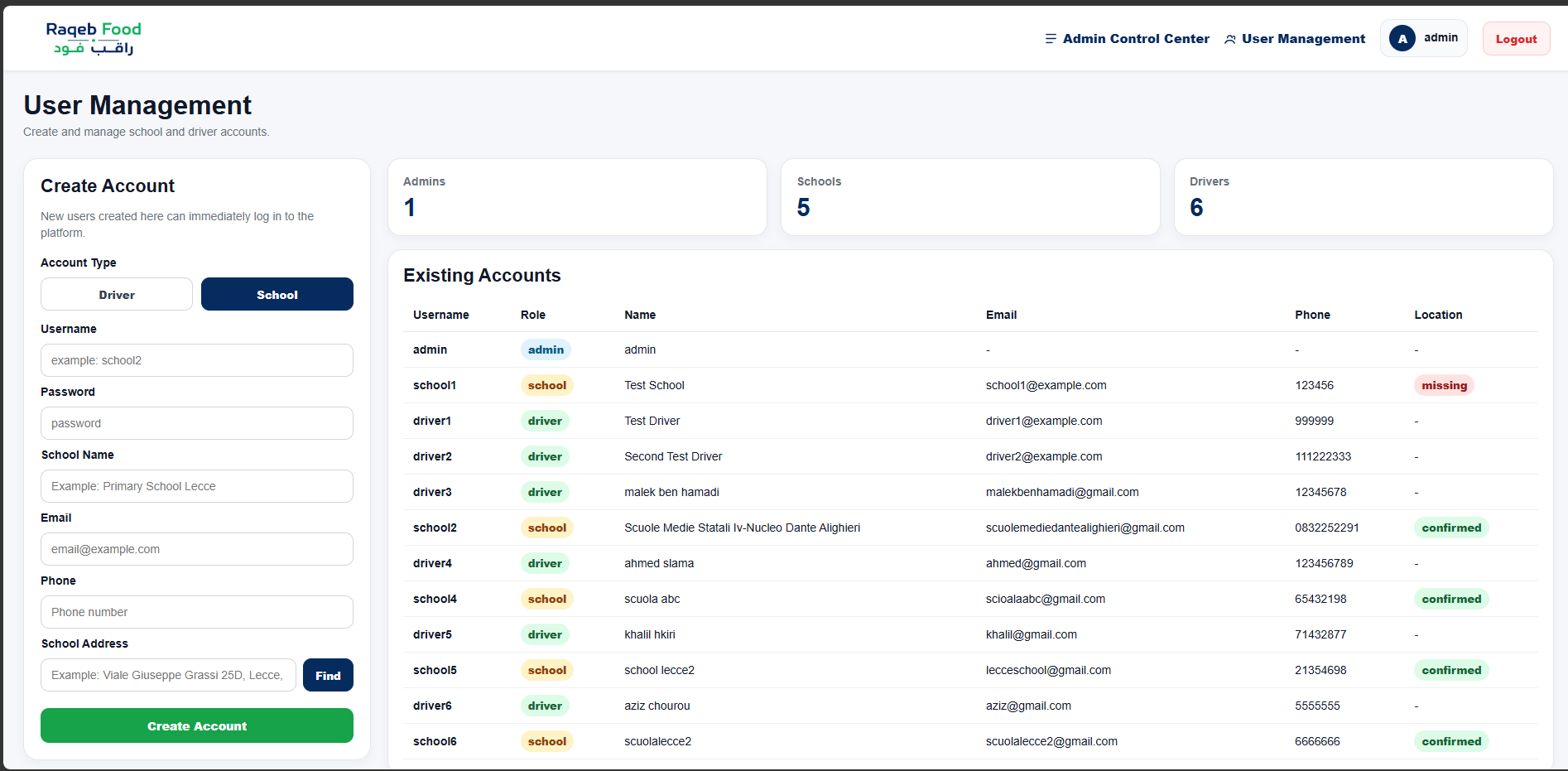
The user management page lets the administrator create accounts for drivers and schools, view registered users, and keep the role-based access structure organized.
School Dashboard
Schools can build a delivery request by selecting food items, entering quantities, choosing the requested delivery time, and adding special notes for the administrator.
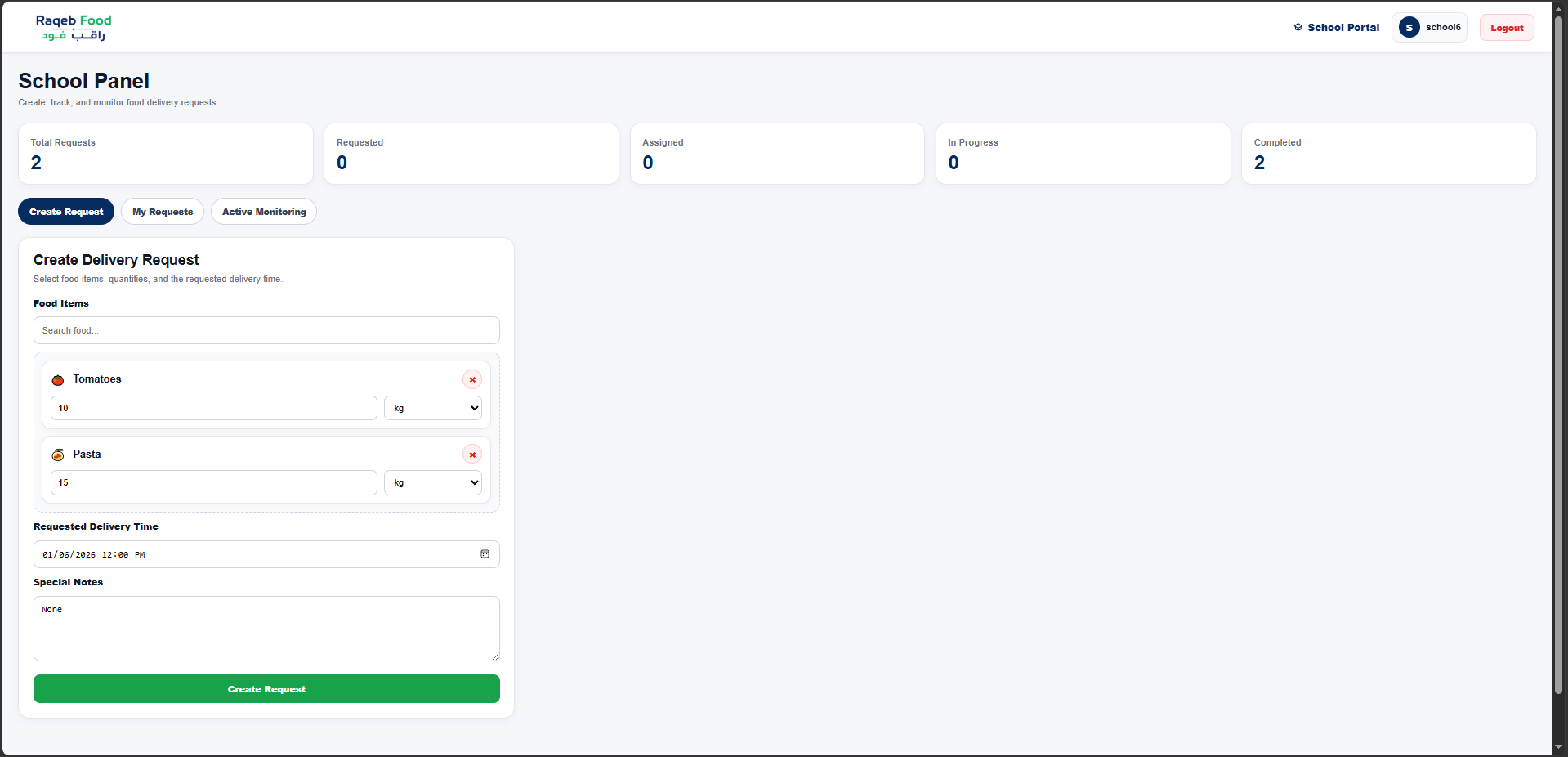
The school can follow the delivery workflow by viewing submitted requests, food details, requested times and current statuses such as requested, assigned, in progress or completed.

Driver Dashboard
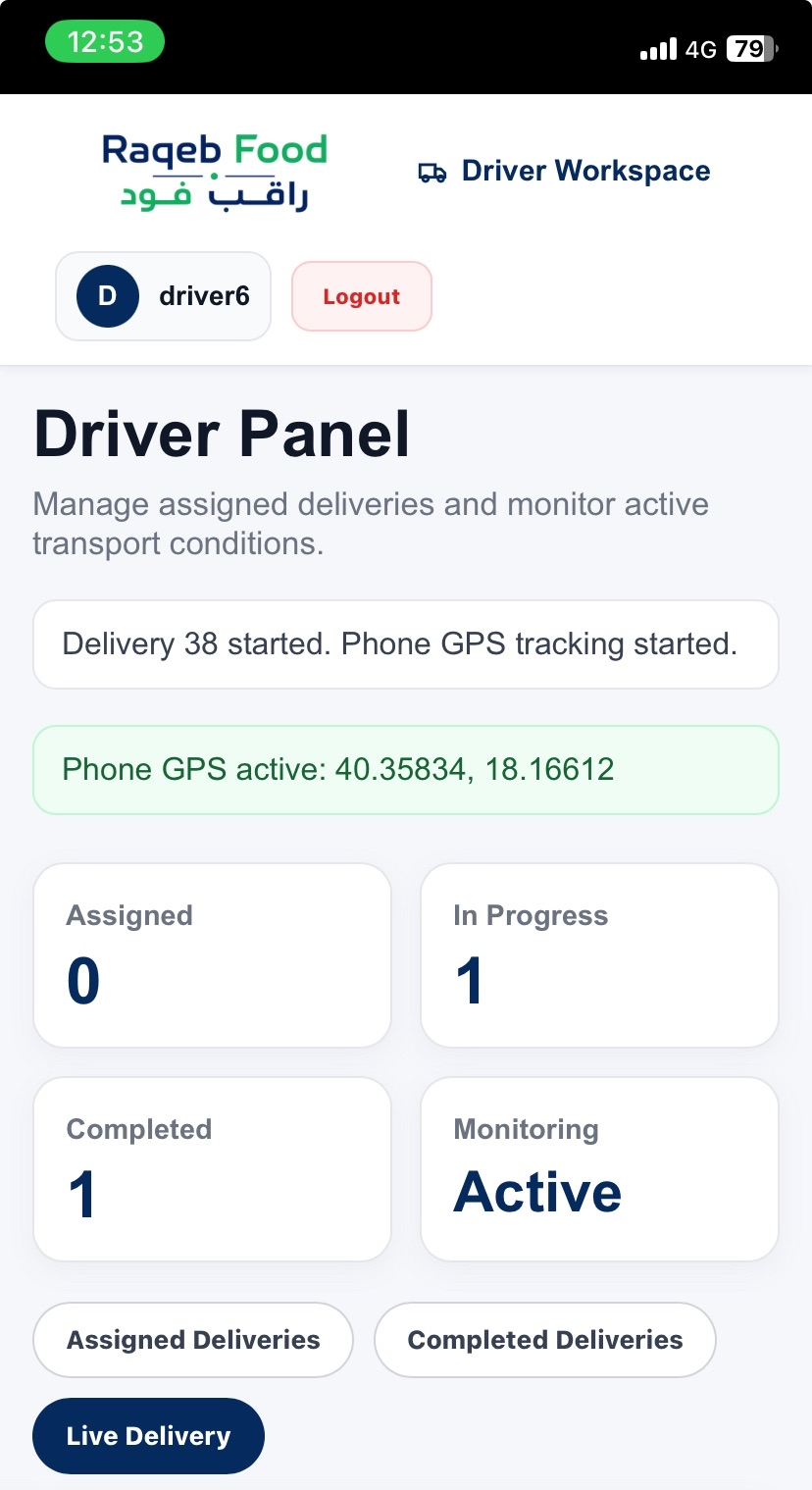
Live Monitoring
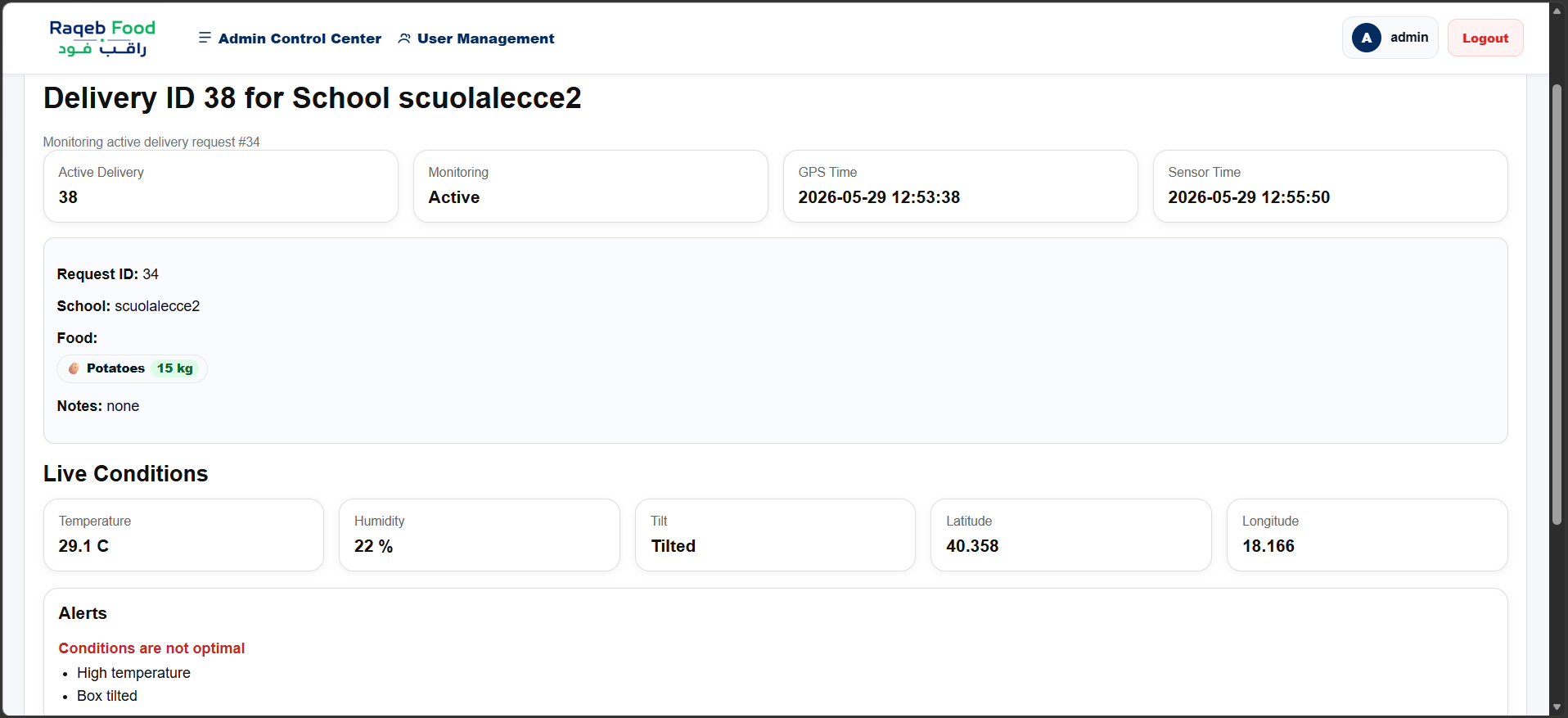
The system monitors live data during active deliveries and stores meaningful event-based records such as sensor changes, tilt events, alerts and delivery start records.
Tracks box temperature and detects high-temperature situations.
Monitors humidity to protect sensitive food during transport.
Detects unstable handling or box movement using the KY-017 tilt module.
Receives driver location from the phone browser during the active delivery.
Shows condition alerts when temperature, humidity or tilt becomes problematic.
AI Driver Recommendation
The AI module recommends the most suitable available driver for a request by combining request context, food sensitivity and driver monitoring history. A Decision Tree Classifier predicts the delivery-condition risk as low, medium or high. The backend then converts the prediction into a suitability score and ranks the available drivers.
Demo Flow
The prototype demonstration follows the full path from a school request to AI-assisted assignment, live monitoring and final reporting.
Components & Repositories
The backend contains the Raspberry Pi, Flask, IoT, database and AI logic. The frontend contains the React dashboards for the three roles.
Flask API, Raspberry Pi monitoring, SQLite database, authentication, delivery workflow and AI recommendation.
Open Backend RepoReact role-based interface for admins, schools and drivers, including live monitoring and GPS workflow.
Open Frontend RepoStatic showcase website for presenting the project structure, demo flow, components and future work.
Open Website RepoLimitations & Future Work
The current AI dataset is synthetic/prototype-based and can later be replaced by real deployment data.
A production deployment should use HTTPS hosting for reliable browser-based GPS tracking.
A live map could be added to visualize the delivery route and current driver position.
Additional sensors could improve monitoring accuracy and food safety analysis.
Future models could use more real examples and more advanced recommendation strategies.
Route tracking could be improved with richer historical GPS traces and reports.